Sometimes, the simplest cases can turn out to be the most complex.
The basic facts are surprisingly simple. On the evening of August 11, 2008, 24-year-old Sarah Widmer drew herself a bath in the suburban Cincinnati house she shared with her husband, Ryan. A short time later, he would make a 9-1-1 call, telling them “My wife fell asleep in the bathtub and I think she’s dead.”
These few facts are, perhaps, the only thing that everyone can seem to agree on.
According to some, Sarah fell asleep in the bathtub and tragically drowned.
Others say that isn’t what happened at all. They believe that Ryan killed his wife and then tried to make it look like an accidental drowning. That was also what the jury believed after Ryan was arrested for Sarah’s murder.
So then why are there so many people who believe that Ryan is innocent? And why do others believe he’s a stone-cold killer?
The Evidence (Or Lack Thereof)
In the realm of fiction, there is always that one clue that solves the case for the detective – that one piece of evidence that proves who the killer is without doubt while also eliminating all other possible suspects. Sometimes this happens in real life, but quite often investigators (and later juries) must piece things together and try to paint a full picture from incomplete (and often contradictory) information.
The investigators who arrived at the Widmer house did not find any signs of an intruder: no broken windows, no doors that had been forced open, no signs at all that anyone who shouldn’t have been in the house had been there at all.
The first officers on the scene noticed that while Sarah’s hair was moist, the rest of her body was not “overly wet” – which they believed should have been the case if Ryan had discovered his wife unconscious in the bathtub after nearly half an hour of bathtime.
Likewise, they were puzzled after finding the bathroom nearly entirely dry. There was no water on the floor, one towel they found was slightly damp, but the rest were completely dry.
What is odd about this is that often many people from both sides (Accidental Death or Murder) have tried to use this fact alone to “prove” that their view is correct. Those who believe the murder theory say that the dry bathroom is very suspicious because clearly Ryan was up to … something. Alternatively, those who do not think Ryan killed his wife say that this act would have caused a lot of water to splash about the room, therefore the dry bathroom indicates it wasn’t a murder.
Toxicology Reports were no help in determining manner of death – as no drugs were discovered in her system. There wasn’t even a hint of drugs, or anything that would have caused her to be unconscious (or not fully alert).
There were almost no defensive wounds on Sarah’s body, just a small bruise on the back of one of Sarah’s wrists. There were no major bruises, no signs of restraints or anything that would indicate that she had just fought for her life.
By the time this case went to trial, nobody could say one way or another what, exactly, happened that night. The investigators said they had no idea, as did the prosecutors. And, after the jury rendered its guilty verdict against Ryan Widmer, a few of them likewise stated they had no idea what occurred either. Yet, they convicted him.
And that caused a lot of people a lot of problems.
The Trial(s) of Ryan Widner
Courtroom drama television shows (and, from what I hear, real-life Law Schools) like to hang onto this cliche that anyone should only be convicted if the members of the jury believe, “beyond any reasonable doubt” that the person is, in fact, guilty.
So when the detectives who worked the case said they did not know what happened that night – as in, if Ryan killed his wife or not … when the prosecutors could not say they were absolutely certain that Ryan was guilty of murder … when the jury likewise states they didn’t have a clue what happened, either – something … is very wrong.
At the trial, two versions of what could have happened were presented. The prosecution painted a picture of Ryan killing his wife in the bathtub and then trying to make it look like an accidental death. The defense, however, tried to make the claim that Sarah died because of an undiagnosed medical condition. The Widmer lawyers had independent forensic testing done, which often contradicted the conclusions of the coroner, detectives, and other individuals the prosecution relied on in court.
The same evidence often drew opposite conclusions. Take, for example, the small bruise on the back of Sarah Widner’s hand. According to the coroner, it was proof that Sarah had tried to fight back against her assailant. The defense attorney’s expert examined the bruise and concluded that it was possible that it was caused by the first responders, either in trying to move the body or while examining it in situ. Both sides in court were asked if they could invalidate the other’s opinion, and both said they could not.
The way the jury viewed the trial was as if they were being asked to choose between two possibilities: First, that Ryan killed Sarah for … reasons? Or, Sarah had an undiagnosed medical condition that caused her to drown. The jury convicted Ryan because that was more plausible.
Wait … whatever happened to Guilty Beyond a Reasonable Doubt?
The guilty verdict, as well as the statements several in the jury made after the trial, led to a lot of outrage. The judge set aside the verdict and allowed Ryan to be tried again.
This time, the trial was mostly the same, with a few refinements here and there. Also, the prosecution attacked the credibility of the defense’s main witness, a former police officer who (I’m not making this up) was painted as not a credible witness because while on duty as a police officer, he raided a party that supposedly had underage drinking going on only to find it was a 52-year-old man’s birthday party. The man had also made a few claims about his education which weren’t exactly lies but weren’t the full truth either.
After over thirty hours of deliberations, the jury informed the judge they could not reach a verdict.
Ryan Widner was then tried a third time. This time, the judge did not allow the prosecution to attack the credibility of the prosecution’s star wiriness, basically calling it a problem of semantics and not knowing all the facts that went into the 52-year-old’s birthday party raid. Neither thing had any similarities to what was being tried now.
This time, the prosecution had a new star witness. Someone who claimed that Ryan had confessed to her that he killed his wife, giving details on how he beat her up, punching her repeatedly in the chest. After this, Sarah slipped and fell, hitting her head, which is what killed her. All because, this new witness said, the two had some minor disagreements.
The jury did not buy her story one bit. The main reason (a few would comment after the trail had concluded) was because if what she said was true, there would have been bruises and a head wound on Sarah, which neither of the forensic experts who testified seemed to notice.
Ryan Widner Claims He’s Innocent
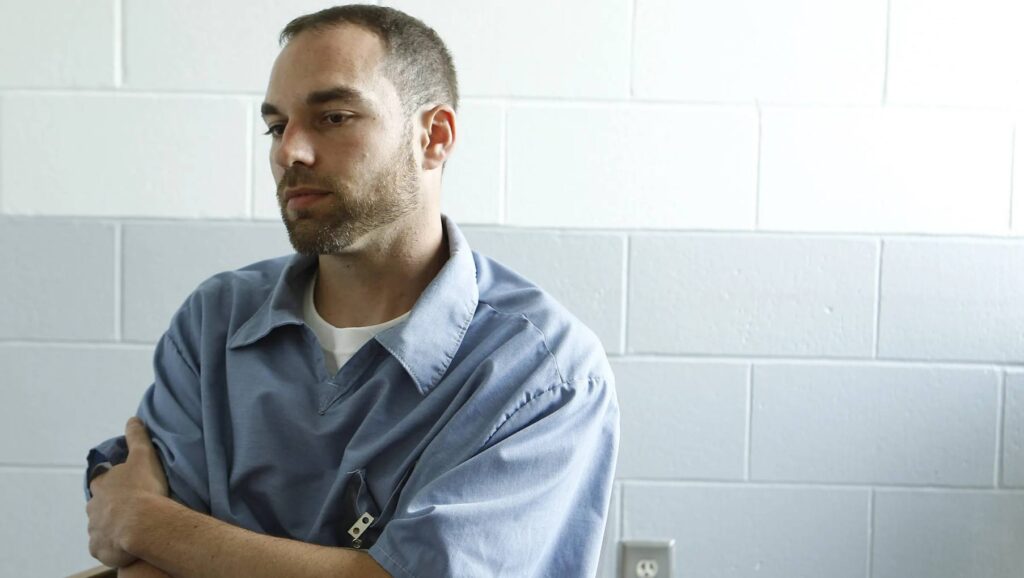
Ryan Widner is currently in a correctional facility in Chillicothe, and he has maintained this entire time that he is innocent. According to him, he and Sarah ate dinner and watched television until Sarah went upstairs to take a bath. He went up a half hour later and checked on her, and that was when he found she was dead.
There has never been a legitimate motive in this case – not that anyone can pin down. While the surprise witness at the third trial suggested that the two had been arguing, everyone else who knew them said they were deeply in love, two newlyweds who were very much committed to each other.
When everyone connected to the couple refuses to believe this as a possible motive, that says something.
Trials like this are supposed to be about the prosecution proving their case – that the party is guilty of the crimes they have been accused of, beyond any reasonable doubt. It’s not the job of the defendant to prove he’s innocent, although it may help (and it makes for a good, dramatic scene when Perry Mason gets the real killer to accidentally confess).
Most of the analyses of this trial that I have run across all say that even by the simplest standards, the prosecution failed to get anywhere close to proof that Ryan killed his wife. Without evidence that there was anyone else in the house at the time, there were only a few possibilities. Either … he did it, or she died an accidental death. I suppose a third theory is that she un-alived herself, although there does not seem to be any evidence anywhere that supports this theory.