Ohio is not lacking in unsolved mysteries just begging for answers. Sometimes, these mysteries fade from memory and become little more than just another statistic. Some, however, seem to get attention every few years, usually when there is some break in the outer edges of the case, or when new forensic technology has been developed that could lead investigators to new conclusions.
The disappearance and murder of teenager Kurt Sova is one of these stories.
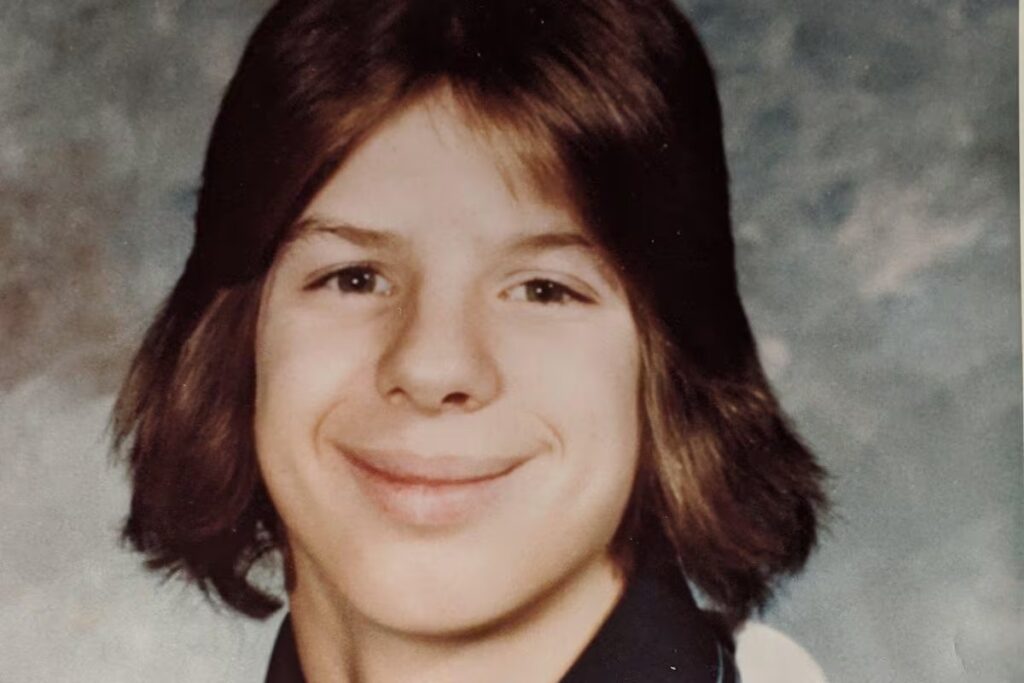
Kurt Sova October 1981
By all accounts, Kurt Sova was a typical teenager, at least according to the standards of the early 1980s. He was the youngest of the four Sova boys, living in the Cleveland suburb of Newburgh Heights.
Kurt was a Junior at South High School and had dreams of playing football. However, a knee injury kept him off the team. Instead, he spent most of his time making models or playing his guitar, often in the company of his friends.
On the evening of October 23, 1981, Kurt attended a Halloween Party not terribly far from where he lived. At some point around nine o’clock, Kurt began to get sick (perhaps from too much alcohol consumption) and decided it was time for him to leave. He asked a friend to help him home, but once they stepped outside, Kurt remembered he had left his jacket inside. His friend went into the house to retrieve the item, but when he came back out – Kurt was gone.
When he did not return home, his parents (Dorothy and Kenneth) began looking for him, which they continued to do for the following days.
There were several people who claimed to have seen Kurt on either 71st Street or Fleet Avenue, two of the larger streets in that point of town. The family frequently visited those streets, placed fliers in businesses, but Kurt was never officially spotted anywhere. His father would tell a reporter from the Cleveland Press that he didn’t know what to think.
Five days later, a small group of children were playing in an undeveloped area near a landfill when they found Kurt, diseased, lying face up in a puddle. The police said that he was in a “Christ-like” position. There were no signs of violence, and they said that they could not immediately tell the cause of death. One of his shoes was found nearby; the other was not found at all.
It would take nearly two weeks before the coroner’s office would release their final report, although it didn’t contain much that wasn’t already known. They were unable to come up with either a cause or manner of death. In other words, he was unable to determine how Kurt died, nor could he tell if his death was accidental, a suicide, or murder.
The only piece of new information the coroner provided was that he believed that Kurt had died approximately two days (between 24 and 36 hours) before he was found.
A Baffling Mystery
Everything we know (and everything that has been rumored) about Sova’s last days alive fails to tell a coherent story.
Several witnesses spoke with police about the party Sova attended before he disappeared, where there was apparently some underage drinking going on. They were aware that Sova was getting sick and stepped outside and was sure that he would be heading home. It wouldn’t have taken his friend very long to obtain his jacket from inside, however nobody could say with any certainty if Kurt wondered off on his own, or if he left with someone else. All anyone knew was that he was no longer there.
Between the night of the party and when his body was found, several people said they believed they had seen him, either in the passenger’s seat of an unknown driver’s car, or they said they had just seen him as he was entering one of the busy street’s storefronts. Yet, when family and investigators went looking at those places, no traces of Sova could be found.
According to Dorothy and Kenneth Sova (Kurt’s parents) the area next to the landfill where he would eventually be found had been searched at least twice and they both insist that the searches were thorough. If there were any signs that Kurt had been there, they believed it would have seen it. It was their belief that Kurt had been placed there the night before he had been found.
The final baffling clues came from the coroner who could not state how or why Kurt had died. He did note that Kurt’s Blood-Alcohol Level was beyond the legal limit for driving, but that did not suggest anything about the cause of his death.
The coroner also said that Kurt had only been dead 24 to 36 hours before he had been found, which raises the question of where he had been between then and when he disappeared from the party.
For the next several months, police followed every lead they could but were unable to draw any conclusions. Then, it happened again … well … maybe. The circumstances were different and the police were now leaning in the direction of Sova’s death being of “natural causes”.
January 1982 – Eugene Kvet
One block away from the home where Kurt Sova lived, a slightly younger boy named Eugene Kvet (or Kvett) lived with his family. Kurt and Eugene weren’t friends, per se – just two kids who knew each other from the neighborhood.
One night, toward the end of January, Eugene left his house heading for school. He never made it. When his parents learned their son was missing, they contacted police and began searching themselves.
Three days later, Eugene’s remains would eventually be found. Like Kurt, his body would be staged in a ravine – less than a mile away. Like Kurt, the body had most likely been dumped there. Like Kurt, his right shoe was missing.
Like Kurt – nobody knows who killed the boy … or why.
1991 Dorothy and Kenneth Sova Investigates
In the days, months, and years following her son’s death, Dorothy felt like she had been lied to every step of the way. Or, at least, she wasn’t always told the truth.
One of the people she took the biggest issue with was the Chief Deputy Coroner of Cuyahoga County – Lester “Laib” Adelson (MD). He was a well-known figure around the Cleveland Forensic community, at least after his involvement in the eternally questioned Sam Shepard murder case and trial, having also performed the autopsy on his wife Marilyn (the results of which may, or may not be questionable in hindsight.)
At the time, Adelson publicly stated that he had ruled out every single possible cause of death for Kurt Sova – there were no signs of foul play, no sense of trauma, no underlining illness, no drugs in his system and a blood-alcohol level barely above the legal “impaired” limit – this was just one of those cases where a perfectly healthy young man just dies and that’s all there was to it.
The Sova parents didn’t accept this answer, perhaps because they were the grieving parents desperate for answers about their son, or maybe they were among the large group of people who thought that was a stupid answer.
Over time, they developed a mistrust for the Newburgh Heights Police, which they would later learn was well founded. Lieutenant Robert Carras, the lead investigator in Kurt’s case, would later be sentenced to six to twelve years in prison on charges of police corruption, police brutality, and drug offenses. The Chief of Police, James Lucas, found himself in some hot legal water when he was charged with giving false information to a police dispatcher. During that investigation into him, it was also discovered that when he applied at the Newburgh Police Department, he lied about his previous work record – especially the part about a previous conviction for Dereliction of Duty. (And no, the police corruption did not stop there.)
Since the day that Sova’s body was discovered, the Cleveland Police Department (a larger police force with more seasoned detectives and more resources than the small suburban town) offered to assist the Newburgh Heights police in their investigation. For years, all requests were denied.
After they had finally been invited into the investigation (years later) they sent a small team down to access the situation. After looking through all the case files and investigators notes, they quickly came to the conclusion that the investigation so far was “a joke”. They pointed to several leads that had never been followed up on, witnesses that had never been questioned, obvious clues that had not been investigated. They noted the lack of photographs taken of either the victim or the location where he was found. Police had barely questioned the people at the party, nor had they searched the searched the building the party had been at.
Then again, why should they take this case seriously when the coroner had determined that a perfectly healthy young man had just died for no apparent reason?
After taking a look at the evidence (and the lack thereof) the Cleveland Police began to compile a list of suspects they had hoped to interview. Some, by then, had been deceased. Others simply could not be found. However, there was one notable name they came up with they really wanted to question – Robert Carras.
Cuyahoga County Assistant Prosecutor James A. Gutierrez did question him as part of the investigation of corruption against him (not entirely at Cleveland’s insistence). Their main concern was that on several occasions, Carras had taken possible suspects into ravines like the one Sova had been discovered in, and tried to pick fights with them, or question them in a borderline violent manner away from witnesses. It is unclear whether the Prosecutor cleared him of involvement in Sova’s death or if they were unable to gather enough evidence to take things further.
While the police failed to investigate certain avenues of investigation, Dorothy and Ken Sova did not.
Dorothy learned that when Kurt left the house to hang out with his friend Sam, someone had seen them outside a liquor store trying to get an adult to buy them some Everclear (a highly flammable, 190 Proof alcohol that has since been nearly universally banned after causing too many deaths … and fires). This, Dorothy did not want to believe as she had never known Kurt to drink alcohol or do any kinds of drugs, yet she admitted it was possible as this was something young adults sometimes did at the time.
The party had been held at the home of Debbie Sams and her brother, Clayton. The day after the party, Dorothy went to Debbie’s house only to be told there was no party and nobody there knew either Kurt or his friend Sam. After Dorothy spoke with a pizza delivery guy who had delivered food to the house that night, she was told that yes, there had been a small group of people, including Kurt, but nobody there knew what had happened to Kurt after he got sick and left.
That night, Dorothy got a telephone call in the middle of the night saying that the caller had seen Kurt sleeping in a cot in Debbie’s basement. Kenneth went to investigate the following day. He did discover the basement cot but found no evidence that Kurt had ever been there.
For Dorothy, Kurt’s attendance at this party was confusing. She said that she had a very close relationship with her youngest son and knew who all his friends were, yet she didn’t know a single one of those people. If anything, she believed they were somehow connected with his friend Sam, yet that, too, seemed off.
Dorothy learned that a day or so after they had distributed Missing Posters along Fleet Avenue, a man described as a vagrant went into a record store and spoke with the worker claiming that Kurt was dead and that he’ d be found in two days. The following day, he appeared again with a bouquet of flowers along with a note that read: Roses are red, the sky is blue. They found him dead and they’ll find you, too.
Shortly after Kurt’s body was discovered, Police went looking for the man but were unable to find him. Dorothy and Ken looked as well, with the same result.
At some point after Kurt had been discovered, Ken spoke with a friend of Kurt’s named David who had claimed to have seen Kurt walking down Fleet Avenue with a man he didn’t recognize three days after the party. (He would have known Sam, so it must have been someone else.) At that time, he was unaware that Kurt was missing, otherwise he would have contacted the family sooner.
David heard Kurt’s companion call out the name “Franko” before the two crossed the street and got into the back of a van that had been parked alongside the road. The police did not follow up on this lead at all, as far as anyone can tell.
Dorothy believed that the van could have belonged to a young man named Craig Franko, a young man killed during a convenience store robbery a few months after Kurt’s death. It is worth noting that no connection has ever been found between Craig Franko and Kurt Sova. Also, so far, that death also remains unsolved.
Several months after Kurt’s death, Ken was contacted by a woman who claims that she saw what she believed to be a few drunk kids carrying something into the ravine behind her house the night before Kurt’s body was discovered. Later, she came to the realization that what she saw could have been two guys dragging a body, presumably Kurt, to the location he was found, roughly 500 meters from her place. She was never questioned by the police.
In 19//, a new television program debuted and when Dorothy and Ken found out about it, they instantly called producers trying to get them to feature a story about Kurt. That show was (of course) Unsolved Mysteries and that episode aired as the first segment on November 23rd. This, at least, brought the local story into the National spotlight.
Dorothy’s Theory
Up until the day she passed away, Dorothy never learned what happened to her son, never learned how or why he died. She never learned the truth.
She did state often that she believed that someone who was at this party killed Kurt, although she admitted she didn’t know if it was intentional or accidental. She believes the peope at the party covered it up and that the police were too corrupt to investigate. She places a large part of the responsibility on Debbie, who lied to her, whose story kept changing every time new facts became known.
She believes that Kurt, for some reason she cannot fathom, stayed in her basement a couple of nights, and that was where he had died. Then, someone (or a couple of someone’s) then moved the body to the ravine where it was found the next day. She believed that there must have been some form of criminal activity going on at that duplex house, and that they had somehow managed to get Kurt involved, or Kurt witnessed something he shouldn’t have.
Dorothy also admitted that she was a long way off from ever proving any of it.
Today, Kurt’s death remains unsolved. His cause of death remains unknown; his manner of death remains “possibly accidental”. Some police departments continue to actively investigate the cold case, others simply do not.
While investigating this, I have found no official links that suggest that the deaths of Kurt Sova and Eugene Kvet are linked, nor any connection to either of them to the death of Craig Franko. Yet, there remain many who seemed such connections do exist, if only it could be proven.
Considering the ineptitude of the local police department, I also have to wonder if this case is connected with any further cases, not yet realized. I have to admit – it’s very possible.