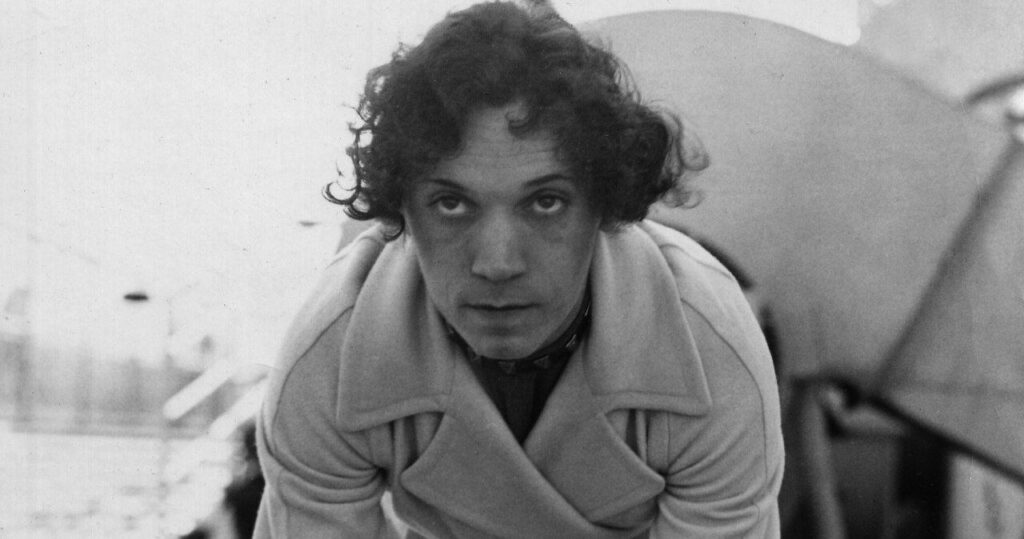
On April 3, 1911, Stanisława Walasiewicz was born in a place called Wierzchownia, Kuyavian-Pomeranian Voivodeship, which is a real place in Poland. But, she and her family wouldn’t live there long for she was still a young girl when her family immigrated to The USA, settling in the Cleveland area. The family changed their last name to Walsh, and Stanislawa became Stella.
Stella Walsh at The Olympics
As a student at South High School in the Slavic Village in eastern Cleveland, Stella discovered that she had an aptitude for Track and Field events. In 1927, she qualified for the Olympic team sponsored by the Cleveland Press, but she was not (yet) a naturalized citizen, so she was not allowed to compete.
In the 1928 Olympics, Stella was inspired by a Polish athlete, Halina Konopacka, who won the Gold Medal in the Discus Throw, which led her to support the Polskie Towarzystwo Gimnastyczne “Sokół” or Sokol Movement. She was able to compete in the Pan-Slavic games, coming away with five Gold Medals (several races and the long jump). Her athletic buddies begged her to stay in Poland, but she returned to the USA and continued to compete in American games.
In the years leading up to the 1932 Summer Olympics, she had been working as a clerk for The New York Central Railroad, and she was eager to represent her new home country. She had, by now, already established herself as force to be reckoned with in Track and Field events, but soon discover she had a major problem.
In this days, Olympic Athletes were expected to pay their own way to get to the games, as well as find their own housing once they get there. Stella was a lowly clerk … in the middle of The Great Depression … and there was no way that she could afford to go. She tried to get help, but couldn’t find anything or anyone willing.
But, then she did, except it was at The Polish Consulate, and they’d only be willing to help if she competed for Poland, not The USA.
This is how she won Gold in the Women’s 100 Meter race at the 1932 Olympics in Los Angeles.
She competed again in the 1936 Olympics in Berlin, coming away with the Silver Medal, being bested by .02 of a second by American Helen Stephens. This would be controversial, although perhaps not for the reason you might think.
Stephens was accused of being a man. They also said that Stanisława Walasiewicz was one, too. The Olympic Committee responded to these allegations by performing a “genital check” on both women, both appeared to have the correct female anatomy, and the issue was put to rest. Although, this fact would reappear a little later down the line.
After Stella retired from competing, she remained active with “Athletics” (later Track and Field) and Polish American causes, often sponsoring competitions and later was admitted to the National Polish-American Sports Hall of Fame. In 1954, she was featured on the Groucho Marx show You Bet Your Life.
The Murder of Stella Walsh
In December of 1980, the sound of gunshots echoed through Stella’s neighborhood in Cleveland. Police responded to the storefront where the shots had rung out and found Stella Walsh laying lifeless in the parking lot, just a few feet from her car.
The question was – Who would do such a thing? Was she targeted for some reason?
Detectives would soon learn a startling fact about Stella before coming to the conclusion that it was hoodlums attempting to rob the store Stella had visited to buy some ribbons for awards.
During her autopsy, it was discovered that Stella Walsh had a condition, some form of genetic mosaicism – in other words, (and it’s a bit more complicated than this) some of her cells contained female DNA while others contained an abnormality making them male. She lacked the ability to bear children, had an unformed (or under-formed) penis, an abnormal urethra and a very small prostate.
Papers at the time started to, somewhat erroneously, print headlines like “Stella is a Fella” and calling her gender into question. Cuyahoga County coroner Samuel Gerber ultimately ruled that Stella Walsh was “socially, culturally, and legally” a female, although her gender would have been ambiguous at birth.
Stella Walsh Today
Today, there are two things that remain to tell the Stella Walsh or Stanisława Walasiewicz story. In Cleveland, there is a recreational center attached to Cleveland South High School that bears her name. She is also buried in Calvary Cemetary.
In more recent years, her story has often been raised when discussing transexuals or intersex individuals trying to participate in sports. To be fair, this is a complex issue, one without easy solutions and is often tainted by political biases.